
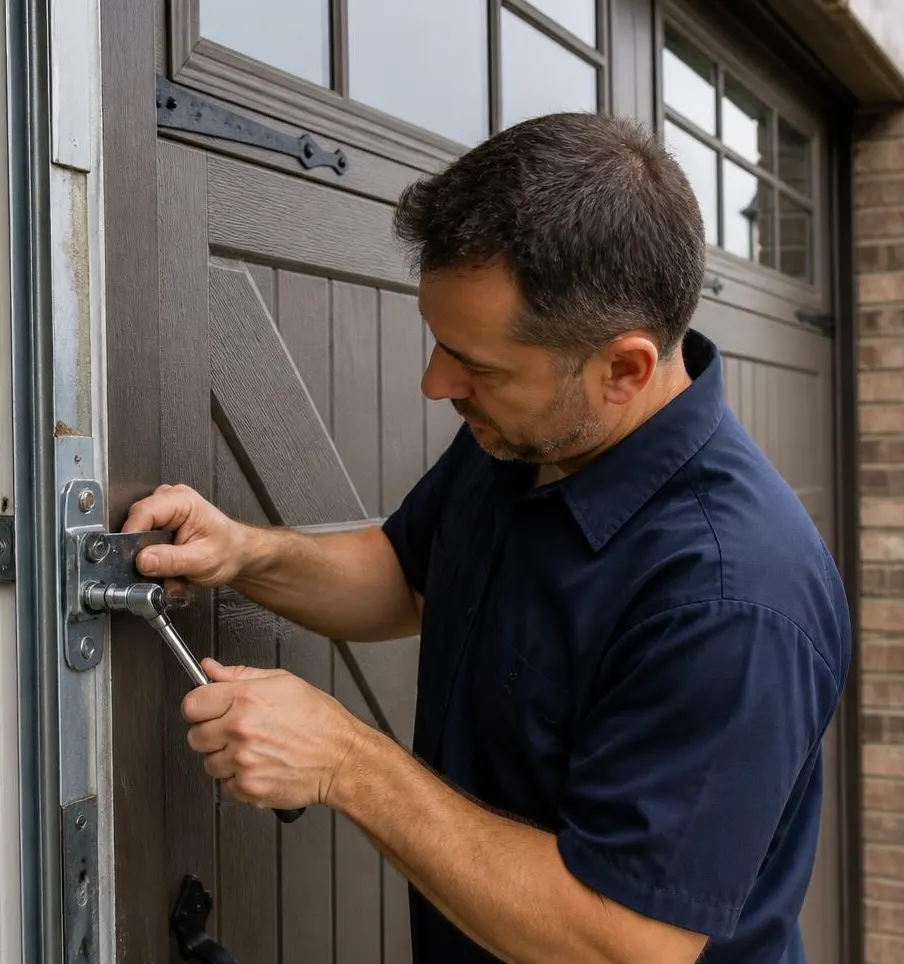
What a Technician Usually Finds on These Calls
Most spring calls around here start the same way: a homeowner hits the opener button, hears a loud bang from the garage, and the door won't budge. By the time we get there, the spring has already let go. But when we ask how the door had been acting over the past few weeks, the answer is almost always the same — it had been getting louder, slower, or harder to lift by hand. The warning signs were there. Nobody caught them because nobody was looking.
With the colder, wetter months coming on — freeze-thaw cycles, road salt drifting into garages, and nor'easters pushing damp air through older doors that were never properly sealed — this is the time of year spring wear tends to catch up with people. Here's a walk-through checklist you can run in your own garage in about ten minutes.
The Checklist
- Look at the torsion spring above the door. If you have one or two long springs mounted horizontally above the closed door, check for a visible gap or separation in the coils. A spring under proper tension sits tight, coil to coil. A gap means it's stretched past where it should be and is losing the ability to hold the door's weight — it could fail on the next cycle or the next hundred.
- Check for rust or flaking metal. Humid summers followed by salty, damp winter air are rough on exposed steel, especially in older garages that were never insulated or sealed well. Surface rust that wipes off is cosmetic. Flaking, pitting, or rust buildup inside the coils weakens the metal and makes a sudden snap more likely, especially once temperatures drop and the metal contracts.
- Run the manual lift test. With the opener disconnected (pull the red release cord) lift the door by hand about halfway. A door with healthy springs will stay roughly in place on its own. If it feels heavy, drops on its own, or you're fighting it, the springs are no longer carrying their share of the load.
- Listen to the opener. If the motor sounds like it's straining, runs longer than it used to, or the door moves noticeably slower than it did a year ago, that's often the opener compensating for springs that aren't doing their job anymore. This also burns out openers faster than normal.
- Watch how the door travels. One side rising faster than the other, visible wobble, or the door looking crooked partway through the cycle usually points to uneven spring tension — common when one torsion spring is failing while the other is still mostly intact, or when one extension spring has stretched more than its partner.
- Inspect the extension springs and safety cables, if you have them. These run along the horizontal tracks on either side of the door instead of above it. Look for stretching beyond the spring's resting length, rust at the hook ends (a common failure point), and make sure a safety cable is threaded through each spring. If that cable is missing, a snapped spring can turn into a metal projectile.
- Note any loud pops, bangs, or creaks during operation. A single loud bang with no obvious cause is frequently a spring that has already partially failed. Smaller creaks and groans during each open/close cycle suggest friction and strain building up before a full break.
- Think about how old the door and springs actually are. A lot of the housing stock in this area still has original garage doors and original hardware. Torsion springs are rated by cycle count, not years, but a spring that's a decade or more old and getting heavy daily use — especially through temperature swings — is living on borrowed time even if it looks fine at a glance.
What Happens If You Ignore These Signs
A door that's slowly losing spring tension doesn't just become inconvenient — it becomes a strain on everything else in the system. The opener works harder and wears out faster. Cables and rollers take on uneven loads they weren't designed for. And a spring that fails while the door is halfway open, rather than fully closed, can let the door drop suddenly, which is where most garage door injuries and property damage happen.
Winter makes all of this worse. Cold metal is more brittle, and a spring that was already weakened by rust or fatigue is more likely to snap during a cold snap than in the middle of summer.
When to Call Tuckerton Garage Door
If you've gone through this checklist and found a visible coil gap, rust damage, an unbalanced door, or a spring that's audibly struggling, that's the point to stop testing it yourself and get it looked at. Torsion springs in particular are under extreme tension and aren't a safe DIY repair or replacement. Our Spring Replacement service covers both torsion and extension setups, matched to your door's weight and size rather than a generic off-the-shelf spring. If you're not sure whether what you're seeing is normal wear or an immediate risk, our Garage Door Maintenance visits include a full spring and cable inspection, which is the easiest way to catch this before it turns into a dead door on a cold morning. And if a spring does let go before you get to us, our Emergency Garage Door Service covers that too.
If anything on this list matched what you're seeing in your own garage, give Tuckerton Garage Door a call before the weather turns. We serve Tuckerton, Little Egg Harbor, Mystic Islands, Beach Haven, Stafford Township, Barnegat, West Creek, and New Gretna, and we show up when we say we will.