
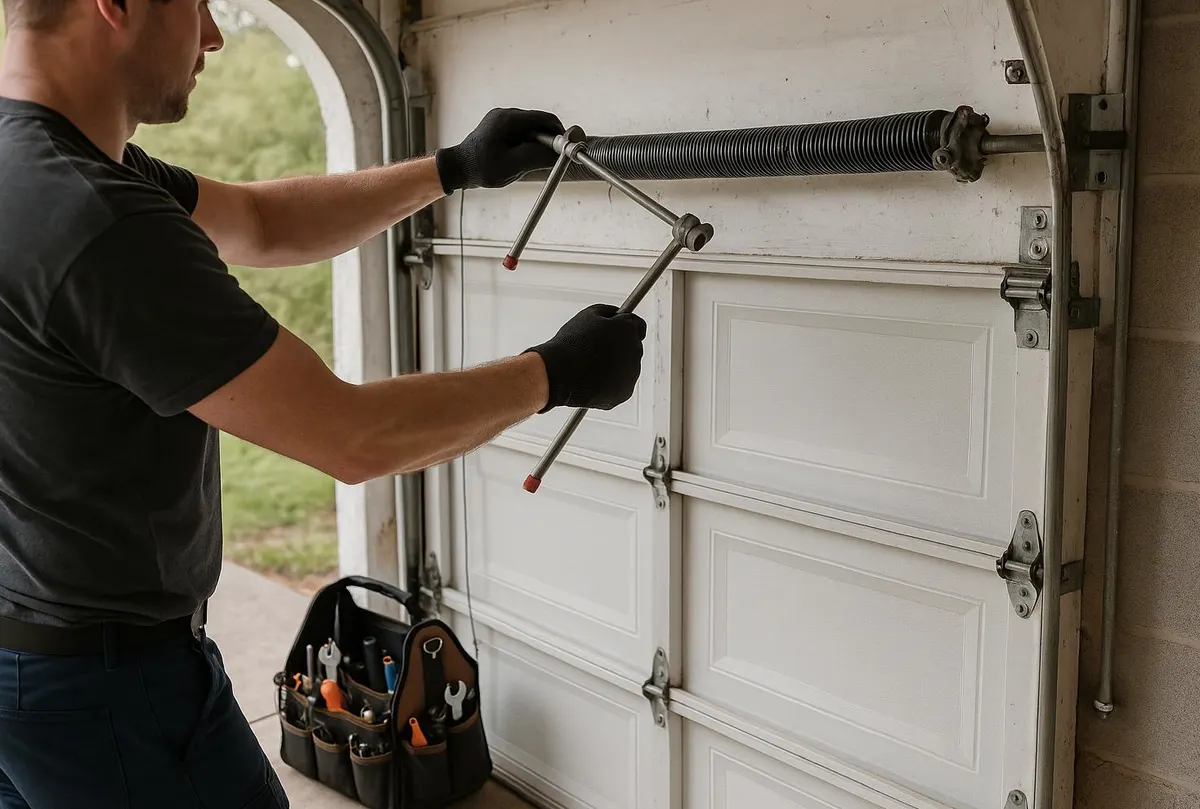
The Mistake: Boarding Up Everything Except the Garage Door
When a nor'easter is forecast, most homeowners go straight for the windows. They tape or board the glass, haul in the patio furniture, and check the gutters. It feels productive, and it's the visible, obvious work. The garage door gets skipped because it looks solid — it's metal or heavy wood, it's bolted into the frame, and it doesn't seem like the kind of thing wind can bother. That assumption is exactly the problem.
Why the Garage Door Is Actually the Weakest Wall
A garage door is the largest opening in most homes, and it's built to move, not to resist pressure the way a solid wall does. When wind hits a house during a coastal storm, it doesn't just push — it creates a pressure difference between outside and inside. If the garage door fails and wind gets into that cavity, the pressure pushing up on the roof from inside can be far more damaging than the wind hitting the outside walls. Once the garage door goes, the rest of the structure is fighting a battle it wasn't designed for.
This is a bigger issue here than in a lot of places. A large share of the housing stock along this part of the Jersey Shore still has original garage doors, some decades old, installed long before modern wind-load standards were common for residential doors. Older tracks, thinner panels, and aging hardware were never tested against sustained nor'easter winds or the gusts that come with them.
What Actually Fails First
- Track separation — older tracks flex under pressure and can pop the rollers out, especially if they've already loosened from years of use.
- Panel buckling — thin or corroded panels bow inward under wind pressure, and once one panel goes, the whole door loses structural integrity.
- Weak attachment points — hinges and end stiles that have corroded from salt air hold less than they used to, even if they look fine from a few feet away.
The Coastal Factors That Make This Worse
It's not just wind. The combination of humid summers, salt air, and freeze-thaw winters means metal hardware along this stretch of coast corrodes faster than it would further inland. A hinge or track bracket that's been quietly rusting all summer is exactly the piece that gives out when a storm finally applies real pressure. Wind-driven rain during a nor'easter also tends to find its way through worn weatherstripping and gaps around the bottom seal, which adds water damage to the list of problems even if the door itself holds.
Concrete Steps to Prepare Before the Next Storm
- Inspect the track and rollers. Look for rust, bent sections, or rollers that wobble. A track that's slightly out of alignment now can separate completely under wind load.
- Check the panels for corrosion or soft spots. Run a hand along the bottom few feet of each panel, where splash and road salt collect. Corrosion there weakens the exact area most likely to buckle.
- Add a bracing kit if your door doesn't have one. Horizontal bracing kits reinforce panels against wind pressure and are a reasonable investment, typically in the low hundreds of dollars, compared to a full door replacement.
- Replace worn weatherstripping. Fresh seals at the bottom and sides keep wind-driven rain out and reduce the amount of pressure that can build inside the garage.
- Test the auto-reverse safety feature. This matters less for storms directly, but a door that isn't functioning correctly overall is more likely to have other issues going unnoticed.
- Make sure the opener has battery backup or a manual release you can actually reach. Power outages are common during nor'easters, and you don't want to be stuck trying to secure a door you can't open or close.
- Lubricate hinges and rollers before the cold sets in. This isn't just a smoothness issue — stiff, corroded hardware is more likely to snap under sudden stress.
None of these steps require tearing the door apart. Most are a 20-minute inspection that tells you whether you're dealing with normal wear or something that needs attention before the wind picks up.
When to Call Tuckerton Garage Door
If you find rust on the track, a panel that flexes more than it should, or hardware that looks original to a decades-old house, that's worth a second opinion before storm season is in full swing. Tuckerton Garage Door handles both garage door maintenance and garage door repair, and for older doors that are genuinely past reinforcing, we also do full garage door installation with wind-rated options built for coastal conditions. We'll look at the track, panels, and hardware, tell you honestly whether a repair will hold up through winter, and get it handled before the next system rolls in off the water.
If your garage door hasn't been checked in a while, don't wait for the first nor'easter warning of the season. Call Tuckerton Garage Door today and get it storm-ready while there's still time.